
Published 2019-05-02
How to Cite
Abstract
Introduction: In endometriosis, intestinal involvement affects up to 12% of patients, compromising the rectum and the rectosigmoid junction in 90% of cases.
Aim: Describe the experience of the Coloproctolgy and Gynecology Team of the Clínica Alemana de Santiago in the surgical treatment of deep pelvic endometriosis with colorectal involvement.
Materials and Methods: Retrospective study based on the database of patients with endometriosis treated between January 2015 and April 2018. The inclusion criteria were patients with deep pelvic endometriosis clinic, who had colorectal involvement and who had been treated with rectal shaving, discoid resection or segmental resection. Electronic clinical records, operative protocols and definitive biopsies were reviewed.
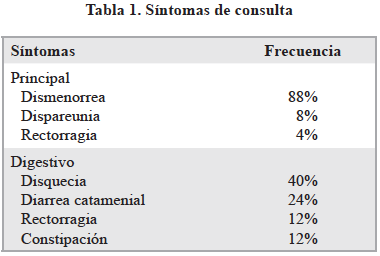
Results: Twenty-five patients with a median age of 35 years were recruited. The main symptom of consultation was dysmenorrhoea and the most frequent digestive symptom was dyschezia. In 8 patients a rectal shaving was performed, in 7 a sigmoidectomy, in 9 a discoid resection and in 1 patient a tiflectomy. The only reported post-operative complication was low gastrointestinal bleeding in 4 of the 25 patients (Clavien-Dindo I and IIIa). A median follow-up of 13 months was achieved, to date 3 patients have been diagnosed with some type of recurrence.
Conclusion: It is important that the surgery to be performed guarantees low morbidity and recurrence. The results in our center are encouraging, which makes us believe that surgical treatment could be a good alternative in deep pelvic endometriosis with colorectal involvement.